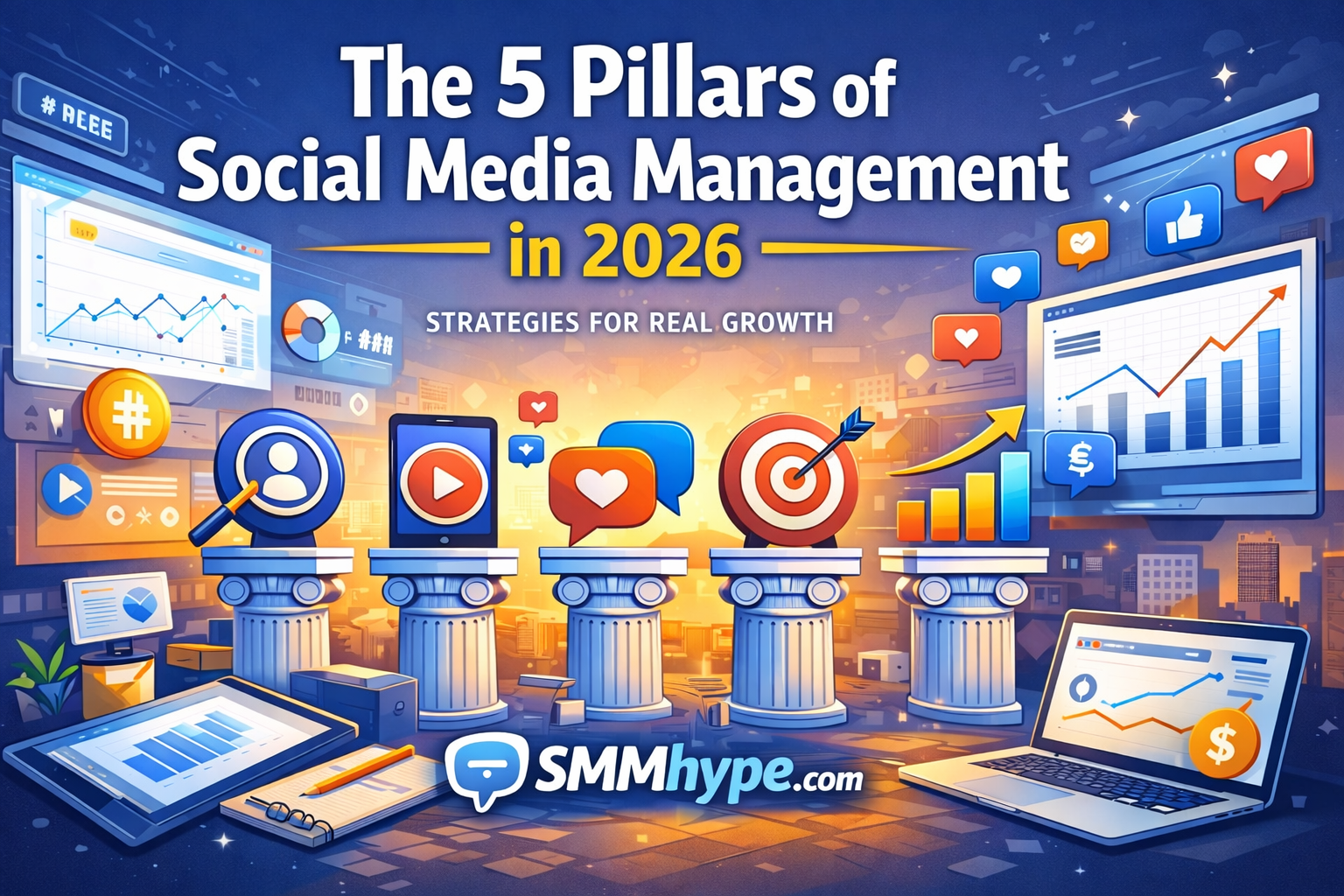
The 5 Pillars of Social Media Management in 2026 (And Why Most Brands Still Get Them Wrong)
Let’s be honest:
Social media in 2026 has very little to do with “posting regularly” anymore.
What we’re dealing with now is a fast-moving ecosystem built on data, psychology, search behavior, and digital trust. Algorithms shift weekly, attention spans are brutally short, and guessing your way forward simply doesn’t work.
Brands that grow consistently today don’t rely on trends. They rely on systems.
Here are the five pillars that separate random posting from real, sustainable social media success in 2026.
Pillar 1: Audience Intelligence & Behavioral Intent
Trying to speak to everyone is still the fastest way to be ignored.
In today’s feeds, generic content doesn’t fail loudly it just never gets seen. Real performance starts when you clearly understand who you’re talking to and what they’re actually trying to achieve.
Demographics Are the Starting Line, Not the Finish
Age and location matter, but intent matters more. What questions is your audience asking? What problems are they actively trying to solve? What makes them stop scrolling?
Personas That Feel Real
Strong brands don’t imagine “followers.” They build detailed personas. Pain points, motivations, objections, even content they distrust. The clearer this picture is, the easier content decisions become.
💡 2026 Reality Check:
Data is everywhere. Insight is rare. Brands using AI to spot patterns in behavior not just numbers are the ones pulling ahead.
Pillar 2: Value-First Content & Social SEO That Feels Natural
In 2026, content has a job to do.
If it doesn’t teach something, spark interest, or make someone feel understood, it’s noise.
At the same time, social platforms are no longer just feeds they’re search engines.
Video Still Wins, But Stories Keep People Around
Short-form video dominates, yes. But raw storytelling, clear messaging, and human tone are what turn views into trust.
Social SEO Without Sounding Robotic
Keywords belong in captions, bios, and alt text but they should feel natural. The goal isn’t stuffing phrases; it’s helping the right people find the right content at the right moment.
Pillar 3: Community Management (Where Brands Stop Acting Like Brands)
Algorithms now reward interaction that feels real, not forced.
Social media works best when it stops feeling like marketing.
Don’t Wait Participate
Reply to comments, join niche discussions, answer questions on platforms like Reddit or Quora. When people see you engaging outside your own posts, trust builds faster.
Listen More Than You Talk
Social listening reveals patterns you won’t find in dashboards. Tone shifts, repeated complaints, subtle praise these insights shape smarter content and better offers.
Pillar 4: Smart Paid Media That Supports Organic Growth
Organic reach is powerful but limited.
Scaling in 2026 almost always requires ads. The difference is how you use them.
Test Organically, Scale Intentionally
Organic content is your testing ground. Once a hook, format, or message proves itself, amplify it with paid media instead of guessing.
Retarget With Purpose
Use data to guide users through a clear journey. Awareness comes first, then trust, then conversion. Ads should feel like a continuation of the conversation, not an interruption.
Pillar 5: Data-Driven Optimization (Without Obsessing Over Vanity Metrics)
If everything looks good but nothing converts, something’s wrong.
Professional SMM focuses on impact, not appearance.
Track Actions, Not Applause
Likes and views are signals, not results. Clicks, leads, sales, and retention are what actually move the needle.
Small Tests, Constantly
Headlines, thumbnails, CTAs tiny changes add up. What worked last quarter may already be outdated, and adaptability is a competitive advantage.
Final Thoughts: Consistency Beats Virality Every Time
Social media growth is rarely explosive but it is predictable when built correctly.
Brands that succeed in 2026 don’t chase algorithms. They understand them, adapt to them, and focus on fundamentals:
Audience insight, real value, human interaction, smart scaling, and continuous optimization.
Get these five pillars right, and algorithm updates stop being threats they become opportunities.